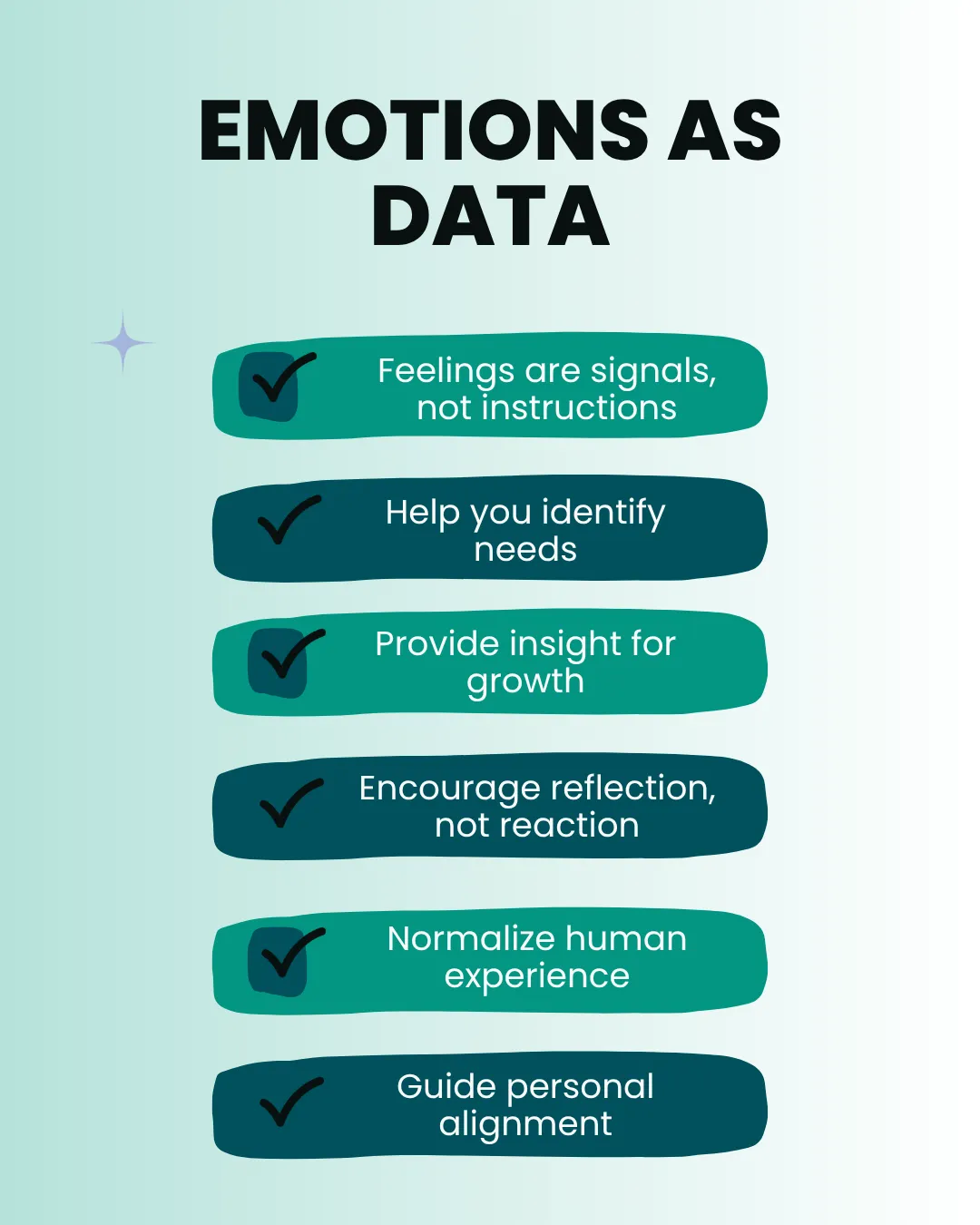
Understanding Emotions as Data
Understanding Emotions as Data
Have you ever wondered why you feel the way you do? It might surprise you to know that emotions can be viewed as powerful tools, providing valuable information about our inner and outer worlds. Let’s dive into how emotions act as data and how we can use this understanding to lead a fulfilling life.
Feelings Are Signals, Not Instructions
Firstly, it’s important to view feelings as signals rather than commands. When you experience an emotion, it's like your body is sending you a message. Just because you feel a certain way doesn’t mean you must act on it immediately.
- Think of emotions as a conversation starter. They prompt you to ask, “Why am I feeling this way?”
- This approach can help avoid impulsive reactions and foster thoughtful responses.
Help You Identify Needs
Emotions can highlight things you may need to address in your life. They act as indicators that something requires attention. For instance, feeling anxious might indicate a lack of safety or preparedness.
- Identifying needs through emotions helps in creating a roadmap for positive changes.
- Understanding these needs allows for setting intentions and goals to address them.
Provide Insight for Growth
Each emotion, whether positive or negative, offers potential insights into personal growth. Paying attention to these feelings identifies areas needing nurturing or improvement.
- Emotions reveal patterns and trigger points, offering opportunities to grow from them.
- Exploring emotions can open doors to personal development and self-discovery.
Encourage Reflection, Not Reaction
Reflecting on emotions rather than reacting immediately helps maintain balance in life. It allows time to process and understand the underlying causes of feelings.
- Reflection can lead to greater empathy and understanding, both towards oneself and others.
- By taking a moment to reflect, it becomes easier to respond thoughtfully rather than impulsively.
Normalize Human Experience
Emotions remind us that we are human. It's normal to experience a wide range of feelings. Understanding this diversity in emotions can bring about inclusivity and acceptance.
- Embracing emotions can reduce the stigma around discussing feelings openly.
- Realizing that everyone experiences emotions makes it easier to connect with others.
Guide Personal Alignment
Lastly, emotions can guide personal alignment by helping individuals live more authentically. They act as a compass, directing towards choices and paths in harmony with one’s true self.
- By listening to emotions, the path to making decisions aligns more closely with personal values.
- This alignment fosters a sense of well-being and fulfillment.
In conclusion, emotions are indeed powerful data points. They offer a wealth of insights and opportunities for growth. Recognizing and understanding emotions can lead to a balanced and fulfilling life. By treating emotions as data, one can live in greater harmony with oneself and the world.