Is Healthy Food Harming Your Health?
Is Your Healthy Food Harming Your Health?
When we think of healthy eating, we often picture fruits, vegetables, and nuts. These foods provide essential nutrients, but what if they aren't always the best choice for you? Let's explore how foods typically considered 'healthy' might not suit everyone.
**Understanding Bio-Individuality**
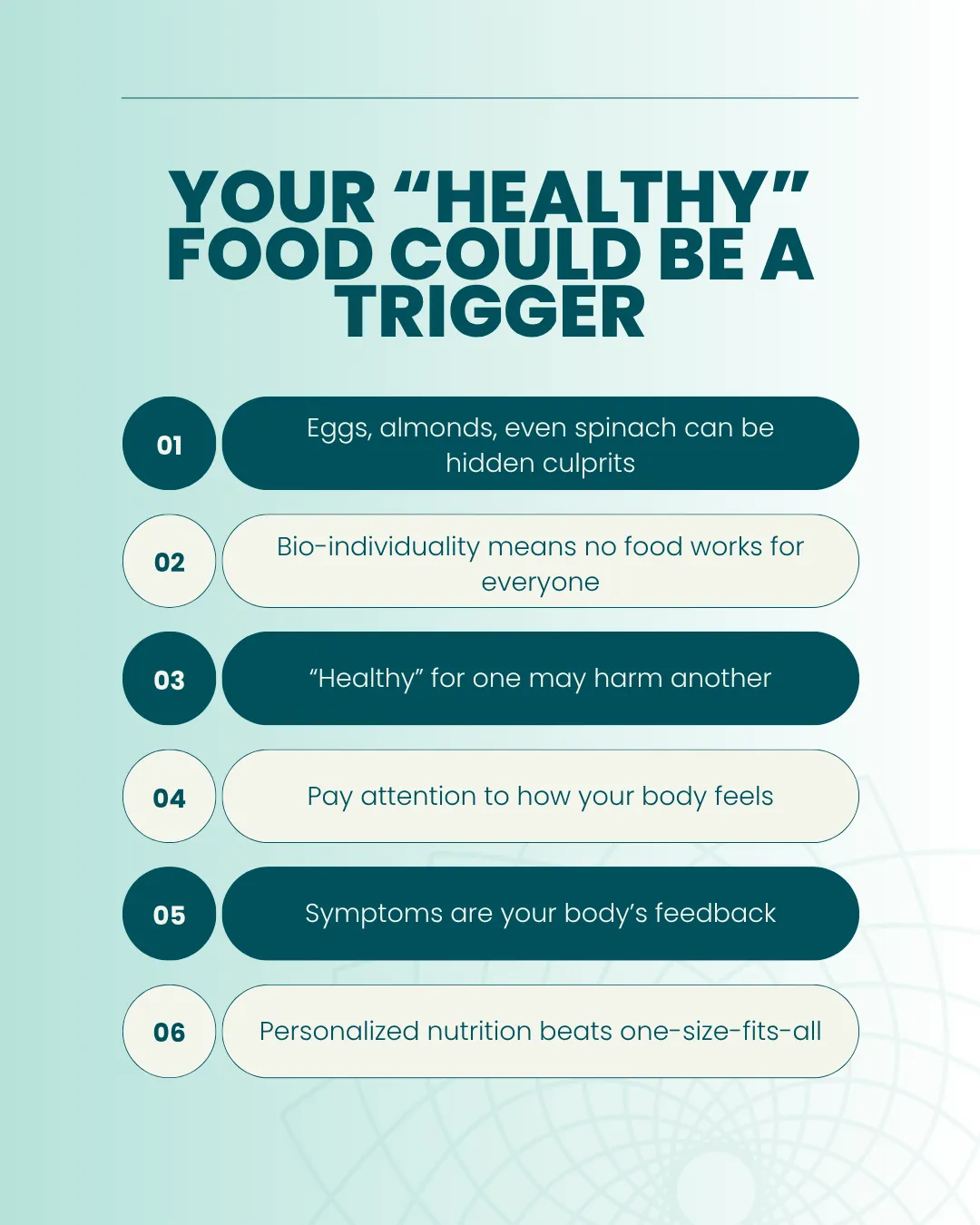
Bio-individuality is the idea that each person has unique nutritional needs. Just as our personalities differ, so do our body's responses to various foods. A diet that suits one person might not suit another.
Foods That May Be Hidden Culprits
- Eggs, Almonds, Spinach: These are commonplace in many healthy diets but can be hidden triggers for others. While rich in nutrients, they may cause sensitivities. Allergic or sensitive reactions can include digestive issues, headaches, or skin problems.
Listening to Your Body
Understanding how your body reacts to different foods is crucial. We are often taught to listen to experts, but our bodies can also give us valuable feedback. Here's how you can learn from your body's signals:
**Recognize the Signs**
- Symptoms: Feeling bloated, tired, or unwell after eating a certain food can be your body's way of saying it doesn't agree.
- Keep a Food Diary: Tracking what you eat and how you feel afterward can help identify potential food sensitivities.
Healthy for One, Harmful for Another
One person's health food can be another person's trigger. Here's why:
- Different Metabolisms: Each person's metabolism is unique. What burns easily for one might not for another.
- Genetic Factors: Genetics play a crucial role in how we process foods. Some people might have genetic predispositions affecting nutrient absorption.
**The Value of Personalized Nutrition**
Many believe that eating a so-called healthy diet eliminates the risk of health issues. However, a personalized nutrition plan can be more effective for enhancing overall well-being. Tailoring your diet to your specific needs can lead to better results compared to a generic approach.
Steps Toward a Personalized Diet
- Consult a Specialist: Nutritionists and dietitians can help customize a diet plan suited to your needs.
- Food Sensitivity Tests: These tests can identify foods your body has trouble processing.
- Elimination Diet: Gradually remove suspected foods, then reintroduce them to see how you feel.
Conclusion
What we eat profoundly impacts our health, but there's no one-size-fits-all diet. The key is recognizing and responding to your body's unique needs. By opting for personalized nutrition, individuals can achieve better health, improve energy levels, and enhance their quality of life.