Is Your Healthy Food Making You Sick?
Is Your "Healthy" Food Making You Sick?
Many people try their best to eat healthily. They choose foods that are known to be good for the body. But what if some of these foods can actually be harmful? Let's explore how your favorite "healthy" foods might not be good for everyone.
Hidden Culprits in Your Diet
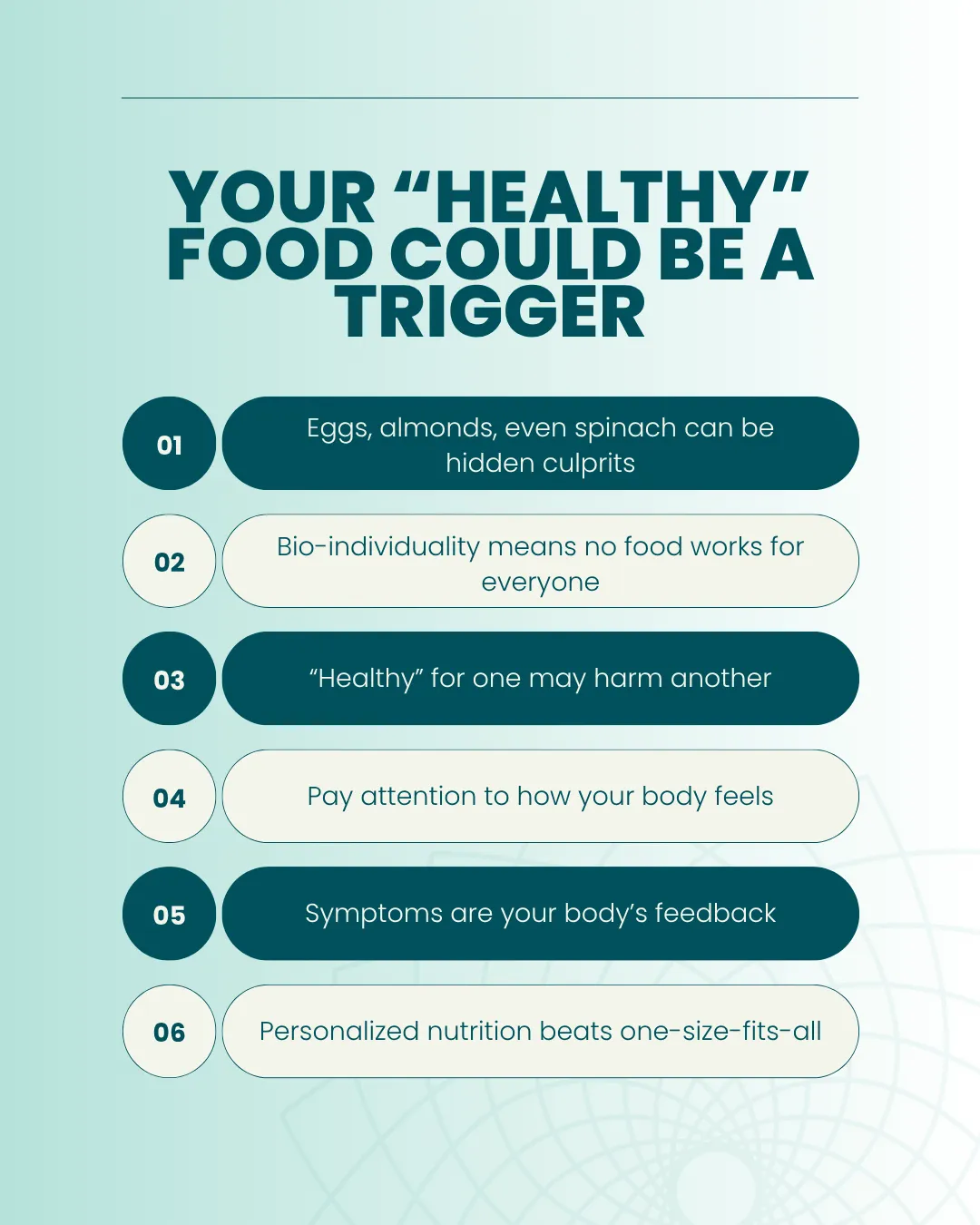
When you think of healthy foods, what comes to mind? Eggs, almonds, and spinach are likely at the top of the list. But did you know that these foods can be hidden culprits? Some people might have reactions to them without even knowing it.
- Eggs: While they are packed with protein, eggs can cause allergies in some people.
- Almonds: Known for their healthy fats, almonds can be a problem for those with nut allergies.
- Spinach: Though rich in vitamins, spinach can trigger issues due to its oxalate content in some individuals.
The Importance of Bio-Individuality
The term bio-individuality means that there is no one-size-fits-all approach to diet. Every person's body is different. So, a diet that works for one person may not work for another. This is why some foods labeled as healthy can cause problems.
Understanding Your Unique Needs
Your body has specific nutritional needs based on genetics, lifestyle, and environment. By understanding this, you can choose foods that truly benefit you, instead of blindly following popular diets.
The Dangers of Generalizing "Healthy" Foods
It is common to hear that certain foods are good for everyone. However, what is healthy for one person may harm another. Here’s why:
- Some people have food sensitivities, which can lead to digestive problems or skin rashes.
- Symptoms like bloating or fatigue after eating a certain food could indicate that your body doesn’t agree with it.
Listening to what your body tells you can help avoid these issues.
Listening to Your Body
Your body communicates with you through symptoms. Pay close attention to how you feel after meals. Are there specific foods that cause discomfort? Recognizing these signs is key to improving your health.
The Role of Symptoms
Symptoms are not just annoyances. They are feedback from your body. If you experience reactions like stomach aches or headaches after eating, take note. This could be your body's way of telling you that something is off.
Benefits of Personalized Nutrition
“Personalized nutrition” means creating a diet plan that fits your unique needs. This approach beats the standard one-size-fits-all diets by considering individual differences.
- Personalized diets can help avoid foods that trigger reactions.
- Working with a nutritionist can provide personalized guidance based on tests and health history.
By embracing personalized nutrition, you can maintain better health, prevent unwanted reactions, and ensure you eat foods that nourish you.
Conclusion
Your health journey is unique. What works as a healthy choice for one person may not be the same for you. Pay attention to your body's signals and consider personalized nutrition as a path to discover what truly makes you feel your best.