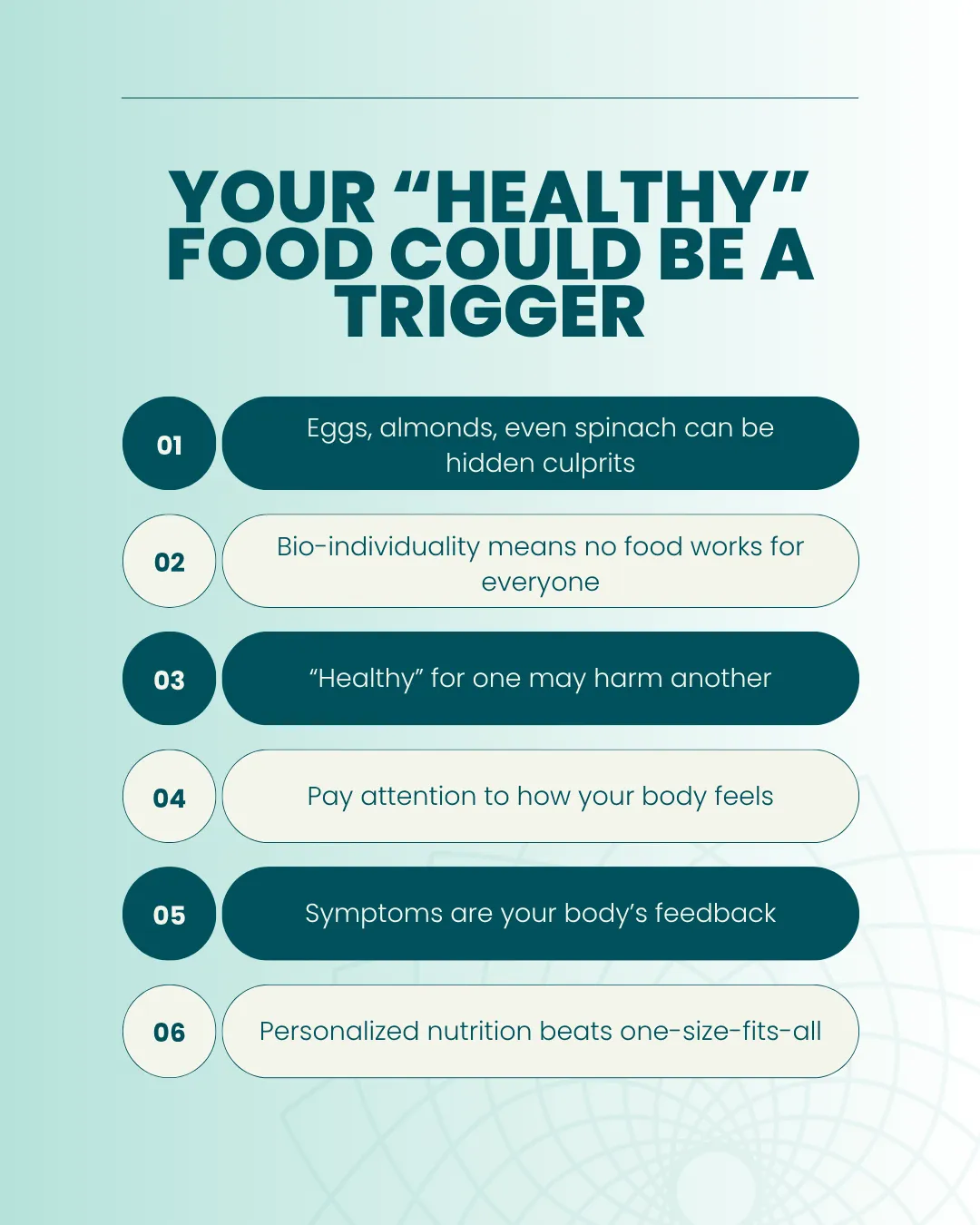
Could Your Healthy Food Be a Trigger?
Could Your 'Healthy' Food Be a Trigger?
In today's health-conscious world, we are always on the lookout for foods that can make us healthier and help us feel better. However, sometimes these so-called 'healthy' foods can be the very things causing us discomfort. Let's explore how the foods you think are benefiting you might actually be triggers and how you can listen to your body to improve your well-being.
Hidden Culprits in Your Diet
Foods like eggs, almonds, and even spinach are often labeled as healthy and part of a balanced diet. However, for some individuals, these foods can cause adverse reactions.
- Eggs: Though rich in protein and nutrients, eggs can be a common allergen for some people, causing symptoms like digestive issues or skin reactions.
- Almonds: Known for their healthy fats, almonds can lead to problems for individuals with nut sensitivities.
- Spinach: Despite its reputation, spinach contains oxalates which can cause kidney stones in susceptible individuals.
Realizing that these 'secret' triggers might be impacting your health is the first step towards better nutrition choices.
Understanding Bio-Individuality
Bio-individuality is the principle that no single way of eating works for everyone. Each person has unique nutritional needs based on their genetics, lifestyle, and even their environmental factors.
- Listen to Your Body: Notice how different foods make you feel. Foods that energize one person might make another feel sluggish.
- Be Open to Experimentation: It’s essential to try different dietary approaches to see what fits your unique needs.
- Consult Professionals: Seeking advice from dietitians or nutritionists can help in crafting a meal plan that considers your individuality.
Recognizing bio-individuality helps in making informed food choices that support your health goals.
The Importance of Listening to Your Body
Our bodies are constantly communicating with us, especially after meals. Paying attention to symptoms can be insightful:
- Digestive Responses: Bloating, gas, or stomach pains can indicate that your body isn’t happy with certain foods.
- Energy Levels: Feeling tired or energized after eating can provide clues about how well a food suits you.
- Skin Reactions: Conditions like acne, rashes, or itchiness can reveal sensitivities.
Notice and respect these signals to guide your dietary choices more effectively.
Symptoms: The Body's Feedback Mechanism
Often, we perceive symptoms as nuisances, but they are essential feedback from our bodies. Symptoms tell us that something might be off, allowing us to make adjustments before they develop into more significant health issues.
- Engage in mindful eating to better identify problem foods.
- Maintain a food diary to track how foods impact your health.
Using symptoms as a guide enhances our ability to make health-positive choices.
Why Personalized Nutrition Works Best
One-size-fits-all approaches rarely address individual health needs effectively. Personalized nutrition adapts to your specific needs and ensures optimal health and performance.
Steps to embrace personalized nutrition:
- Evaluate your dietary habits and reflect on what your body truly needs.
- Adapt your meals to include foods that align with your bio-individual requirements.
- Consider professional guidance to tailor a plan that supports your health goals.
Personalized nutrition provides a pathway to truly understanding and nurturing your body.
Conclusion
Understanding that even 'healthy' foods can be triggers allows you to take control of your health journey. By embracing bio-individuality and listening to your body’s feedback, you can make choices that are right for you. Remember, your body is unique, and nourishing it requires a personalized approach.
Explore nutrition that harmonizes with your lifestyle for a better, healthier you.